


How Pluribus has Changed the way I View Storytelling

When I was a kid, my dad would practically force me to sit down and watch some of the films from his childhood. One of his absolute favorites was “The Time Machine,” for many reasons, but none more so than its ending, which asks the open-ended question of what book you would take with you if you were to be tasked with educating primitive humans in the past. I hated it. I simply wanted to know what the character of ______ chose himself. It was at that moment that I decided open-ended conclusions to stories weren’t for me. And while thousands of stories would come and go in that time with much more sophisticated interpretation than a simple question, I continued to believe writing without a direct aim was lazy and poorly constructed. If a creator said the interpretation of their work was up to the audience, it simply meant they themselves have no idea, or that they weren’t brave enough to actually push a message. Perhaps most infamously was the question of what the show Twin Peaks is actually about. Even David Lynch doesn’t know! Or perhaps… That’s exactly the point?
Needless to say, I was wrong. Of course I was wrong, but why? My favorite television show ever created is Better Call Saul. It’s not an exaggeration to say that I put it right next to Chrono Trigger as my favorite piece of fictional media ever created. And one day, I may be stupid enough to believe I can write an article that does it justice. It would take more than 100 pages. Regardless, when Vince Gilligan announced he was working on a new series, and one that starred Better Call Saul’s co-protagonist, I was immediately on board. I knew Pluribus would be good. What I didn’t expect was that the mind of Gilligan would once again change the way I view stories. Pluribus is a sci-fi epic about a miserable woman who has to save the world from a virus that assimilates everyone on Earth into a single hivemind collective. In a twist from normal conventions, however, the hivemind is seemingly peaceful, kind and only wishes to help humanity. They also seem incapable of feeling anything but happiness and satisfaction.
Carol, our lead protagonist is a refreshingly bitter and apathetic character who dares to critique the situation. And indeed, she is right. No matter how flowery things may be, the loss of our individuality and free will is far too high a price to pay. That’s not to say the show does not make a compelling argument against that idea, however. After all, world peace is achieved in an instant once us (what the hivemind calls itself) takes over. This naturally lead to many theories from the audience over what Pluribus’ story is truly about. And to my shock, Vince Gilligan, not only refused to give any answer, but he seems to outright admit that he doesn’t truly know yet. I thought to myself, “How could a man who wrote Breaking Bad” not know? Does he just get lucky? There are many different ways to write a story, but I do believe there are objectively correct methods in some cases. Of course, this also brings up the old dichotomy of the writing pantser and the plotter. A plotter is a writer who has it all planned out ahead of time, and a pantser essentially makes it up as they go along. Even in the case of a pantser, however, I still believed that the meaning of a story could never belong in the eyes of the audience. They can interpret things, yes, but only the writer truly knows, right?

This probably goes without saying, but I already love Pluribus. Its characters are rich, the show is full of detail and brilliant show-don’t-tell moments and it takes its time to move through its plot unlike so many other series that fire way too quckly. But above all, I adore its messaging. I interpret the show to be about toxic positivity, a topic I have strong feelings about. We learn in the show that 11 individuals besides Carol Sturka are also unnaffected by the hivemind. Unlike her, however, they (well, all but one) embrace this new world for its range of possibilities, peace and the way they can exploit the situation to live a life of lavish. Carol is ostracized completely for having a dissenting view on the situation. The other 11 meet regularly on Zoom calls and she is never invited. They even beat her to the punch on every discovery she makes about the hivemind and she is left to feel like a fool for believing she cracked the case on her own. Carol is the only character (again, almost) who dares to be negative. She wants no part in the hive’s new world, no matter how appealing it may seem. And the show is written so brilliantly that the arguments of her detractors almost convinces you that she’s wrong.
It even starts to convince herself that maybe she’s the problem? Is she insane for being the only one who doesn’t like this? As someone who can be very critical of media, I sympathize completely. While it takes me very little to like a video game, it takes quite a bit for me to love one. I always look for what can be improved and what works and what doesn’t. It fascinates me, and it teaches me how I may one day create a solid game of my own. However, I have no doubt that my writing would be more popular if I was less negative. That’s not to say I’m correct like I believe Carol is, I simply believe the world has a significant issue with toxic positivity, especially since the advent of social media. It is often the fans of a product who are the most viscious in my experience. And anyone who dares to think differently, or not see something as perfect is made out to have a vendetta against the product, or for simply being too negative.
The reason I believe it’s a stronger issue than it may seem, however, is in how it manifests. Sometimes it’s more overt, where a fanbase will simply slam you or call you horrible terms for daring to be differrent. But other times, it’s more sinister. Those who dare to be negative are simply ignored entirely for the desire to continue thriving in an echo chamber. I am by no means giving myself credit to suggest that I’m sometimes ignored simply because I’m right and they are wrong. My situation is nowhere near as compelling or convincing as Carol’s. But I have found myself in situations that broke my heart when an individual I considered a friend would slowly ghost me when I would release reviews for games that weren’t overwhelmingly positive. The simple truth is: Positivity gets more hits than negativity. And while that’s very understandable to an extent, shows like Pluribus teach us that there is a strange beautiful power in being pessimistic at times. Carol is clearly a miserable individual, and she despises the hive despite their noble intentions. But is it not a powerful message that someone who hates life would still wish for it to go back to the way it was even if this new one offers her nearly everything she’d need to curb her depression?

Her reasoning is that no matter the benefit, losing who we truly are is not worth it. And although she hasn’t outright said this yet, I believe she aligns with my belief that life without challenge, without hardship and even loss, renders the happy moments almost useless, and is in fact a very boring thing. That may sound like an inherently negative message, to suggest eternal happiness is a curse, but I don’t imagine many would argue it’s the right one. All of that, however, is just one way to interpret the story of Pluribus. Others have found it to be a scathing commentary on aritcial intelligence, especially the kind that is overtaking our lives at this present moment. Besides Carol, there is one other individual who rejects everything the hive offers, and he is even more stalwart in his beliefs.
The character of Manusous, based in Paraguay, is revealed halfway through to be Carol’s only potential ally in their seemingly apocalyptic scenario. Unlike Carol, however, Manusous is so incredibly pure that he has not once allowed the hive to aid him, not even in sustenance. In the show’s most recent episode, Manusous makes a trek to Albequrqe in order to unite with Carol and help her in saving the world. He eventually arrives at a location known as the gap, which separates North and South America. It is the most dangerous forest in the world. The hive urges Manusous to turn back for his own safety and offers to take him to Carol directly. Manusous responds with one of the most profound statements in the entire show. “Nothing on this planet is yours. Nothing. You cannot give me anything because all that you have is stolen”It was cathartic to watch someone finally tell the hive what they deserve to hear, but to my surprise, this brought about an entirely different interpretation on the internet, and a fascinating one to say the least.
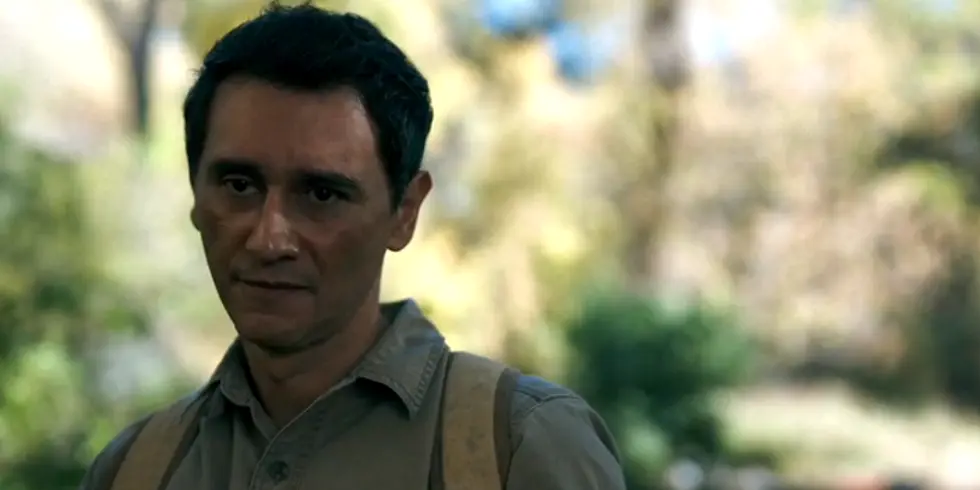
Could Manusous’ words be a reference to the soulless nature of generative AI? Generative AI pulls entirely from that which has already been created. It asks nothing of its “creator.” No trial and no hard work. And it allows one to take an easy way out at the cost of individuality and soul. It sounds familiar. Is Pluribus a show about the dangers of Ai? Vince Gilligan himself has gone on record stating he hates it, after all. The answer, of course, is that Pluribus is thusfar a show about many things, but Gilligan has stated very firmly that he likes to let the audience decide what those many things are. It was in this moment that I realized the beauty of Pluribus (and of course many others shows) and the value in this form of writing. Perhaps a writer truly does not need to know what their show is about, or what its message is? Or perhaps they have an idea, but even their own is not necessarily the only one.
Since its debut, I’ve even seen those who claim the show is about relationships, and even the faults of capitalism, with Manusous’ prior quote lending credence to this theory. The beauty is that all can be correct, and all of it is a result of incredibly deep and profound writing. Vince Gilligan did not simply set out to make a show with a message. He simply made a show, and the message reveals itself. That is the magic of writing. Some authors take this philosophy so seriously that when asked why they wrote a story a certain way, they will simply respond “Because that’s where the story went.” The charactes take on a life of their own, and separate themselves from an author so completely that the story almost seems to write itself. But this is only possible with the highest tier of character writing. If characters are bland or one-dimensional, the story happens to them, and not the other way around. But Pluribus is a show that writes the human spirit so eloquently that we are simply watching humans, and the decisions those humans make will ultimately lead us to the message and what this show is truly about. That’s all Gilligan and co. had to do. In a sense, this offers more freedom in storytelling than any other form.

And it’s also possible that these are the only kinds of shows that are discussed long after they are off the air, because they are complex enough to be interpreted endlessly. I no longer see a show that simply throws darts at a wall to see what hits as a lazy and uninspired form of writing. The idea of letting the audience interpret it has infinite value and is actually a testament to the depth of one’s writing. Because it’s not simply that you wrote something and want to leave the depth up to the audience. It’s that you focused primarily on the heart of a story first, the characters, and feel confident that they can create the story for you. In the end of Pluribus’ most recent episode, Carol Sturka has been left alone for so long that she becomes suicidal. A misplaced firework aims directly at her head and rather than get out of the way, she simply closes her eyes and decides she’s fine with whatever happens. She’s become so broken by this point that the hive successfully forces her back into their arms. She begs them to come back. It’s a decision that had me screaming at my television, but t’s also absolutely the right one for the character and her story. And in that moment, Pluribus became not just a show about toxic positivity to me, but also about toxic relationships and a form of emotional manipulation.
It may sound like I’m simply praising its depth, and I am, but I also realized in that moment that not only was Gilligan right when he said no interpretation is the wrong one, but that this way of writing might in fact be the best, because if the characters are deep enough, a message will emerge no matter what. He doesn’t have to know what it is. It’s not a cop out. It’s an exercise in the human spirit. I’ve written my own stories in the past, but I always decided on a meaning behind them first. Pluribus had made me rethink this strategy. What if one simply comes up with a scenario and characters first and lets the story itself reveal what it’s about? That may be the ultimate testament to the magic of writing. It’s when an author starts to play God. It’s when they’ve given birth to something and someone so real that they can start to do the work for them. I’ve always loved writing for the ability to create something that in the eyes of an audience, becomes real, but I’ve somehow come to love it even more by realizing it does not always have to be shackled by the writer themselves. And there are many stories that I can’t wait to revisit wih this newfound outlook.


Thanks for this article, was an interesting read, one that really hit home for me as i feel very similar on current toxic posivity society and its future.